|
Top Workplace
Heckler & Frabizzio is proud to be recognized once again as one of Delaware’s Top Workplaces for 2026 by The News Journal. This recognition is especially meaningful because it is based entirely on employee feedback. This year marks our tenth consecutive year earning this honor, reflecting the strong culture, teamwork, and commitment to excellence that define our firm. We are grateful to our employees for their valuable feedback and for continuing to embody our Core Values each day. Your dedication is what makes Heckler & Frabizzio not only a successful law firm, but also a great place to work.
|
|
Learning, Networking, and Industry Insight
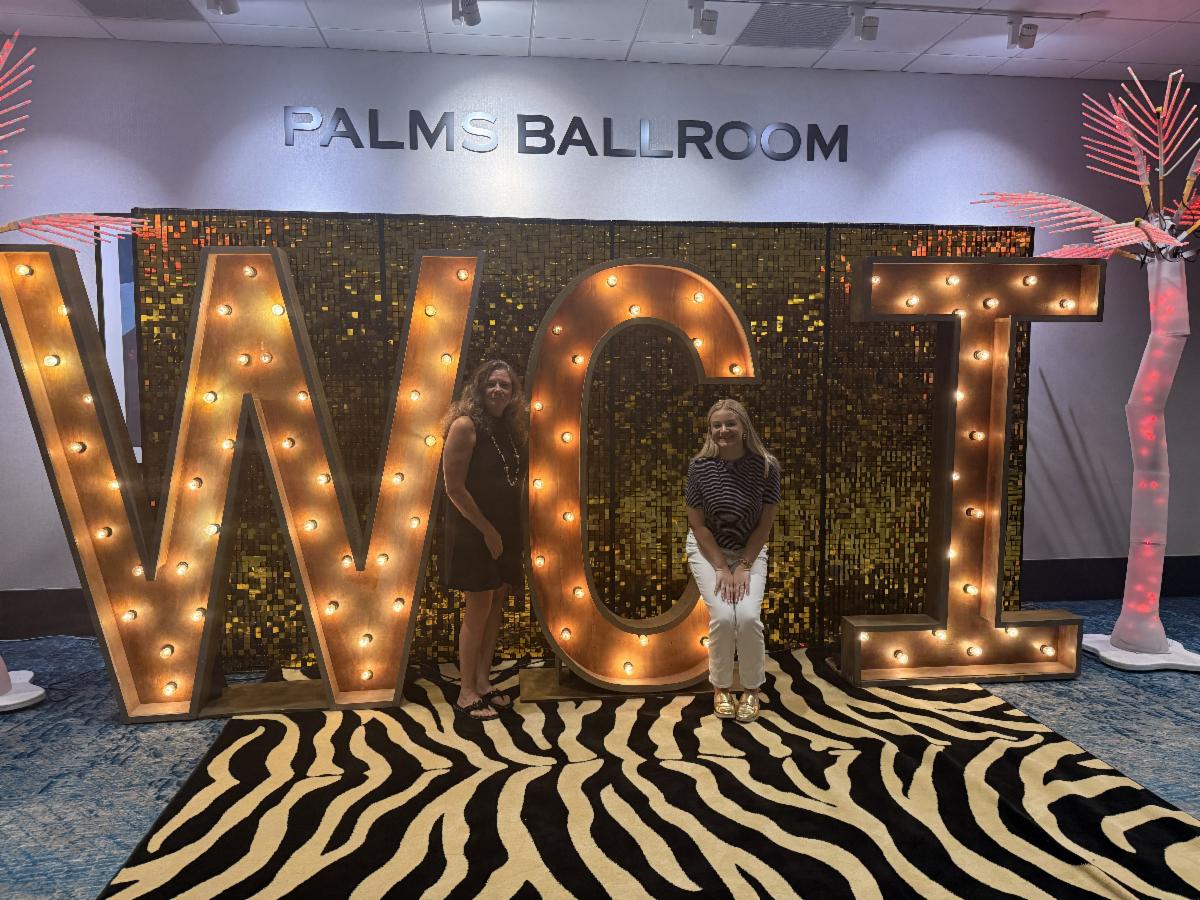
Partner Attorney, Maria Paris Newill and Associate Attorney, Julia McDonald attended the 80th Workers’ Compensation Educational Conference (WCI), “Goes Glam: Bold Ideas & Big Impact,” in Orlando, Florida, August 23rd-26th. The conference brought together workers’ compensation professionals from across the country to discuss emerging trends, legislative developments, and best practices shaping the industry’s future.
By participating in educational sessions and connecting with industry leaders, Maria and Julia gained valuable insights that will further strengthen their workers’ compensation practice. Their attendance reflects Heckler & Frabizzio’s commitment to continuous learning and staying informed on developments that help us deliver exceptional service and effective representation to our clients.
|
|
Celebrating Success at Our Annual Firm Picnic
On August 27, our firm gathered at Lums Pond State Park for our annual Firm Picnic, a day to celebrate another successful year and spend time together outside the office. Filled with great food, laughter, team spirit, and camaraderie, the event gave us a chance to recognize the people who make H&F such a special place to work.
A highlight of the day was the presentation of our staff-voted Superlative Awards. Congratulations to this year’s recipients: Lysa Kaminski, Polished to Perfection; Shiree Anderson, Confetti Award; Nora Silpath, The Cornerstone Award; Michael Stacey, Guiding Star Award; and Liz Hyson, Teamwork Titan Award. We thank each winner for their dedication, professionalism, and positive contributions to our firm culture. Thank you to everyone who joined us in making this year’s picnic such a memorable celebration!
|
|
Advocacy in Action
Law Clerk, Gerald Simpson made a meaningful impact through his work with the Delaware Law School Clinic. Gerald assisted a Navy veteran who had spent years pursuing VA benefits for a disease connected to his military service in the 1960s. Although the condition was linked to his time in service, it did not develop until decades later, making the claims process particularly challenging.
Drawing on his legal and medical research skills, Gerald prepared the appeal and supporting documentation. His efforts helped secure a successful outcome, and less than three months after the appeal was submitted, the Department of Veterans Affairs granted service connection for the condition. Gerald’s dedication and advocacy helped deliver long-awaited benefits to a deserving veteran, reflecting a strong commitment to service and the meaningful impact of legal representation.
|
|
|
WORKERS’ COMPENSATION LAW
Lost and Found – Surgical Anchor Lost in Shoulder During Surgery Does Not Warrant Reoperation
|
|
Claimant underwent shoulder surgery to address a small rotator cuff tear; during the procedure, the surgeon lost a dissolvable biocomposite suture anchor measuring about 0.154 of an inch, which could not be found during the procedure. A subsequent MRI study showed the anchor was starting to absorb, as it was designed to do; they are usually dissolved completely 12-18 months post-surgery. However, claimant’s surgeon wanted to perform a second operation, on the basis the anchor was potentially causing problems and symptoms, even though repeat imaging showed the anchor was not free or loose and was likely trapped in scar tissue, away from the joint area. Dr. Piccioni testified on behalf of the Employer and concluded there was less than a 1% chance the anchor could be removed, and the surgery was not reasonable or necessary; he also felt claimant could work regular-duty.
The Employer filed a Termination Petition, and the parties also asked the Board to address the proposed surgery, as it would impact claimant’s ability to return to work if surgery went forward. The Board concluded the proposed surgery was not reasonable or necessary, as they agreed with Dr. Piccioni that it was expected to fully dissolve within 12-18 months from surgery. Further, the anchor is very small, and there is already evidence that it is absorbing and has not moved; it is not in the joint area to cause locking. The Board accepted that not all surgical complications warrant additional surgery, particularly if the complication does not affect the potential of full recovery. Aside from accepting Dr. Piccioni’s conclusions, the Board expressed concern of the treating surgeon’s lack of documentation in his records identifying the anchor as a point of concern. Having found there was no basis for the proposed surgery, the Board then turned to the issue of work capabilities and concluded claimant was not totally disabled and terminated her total disability without any award of partial disability.
Should you have any questions regarding this Decision, please contact John Ellis, or any other Attorney in our Workers’ Compensation Department.
Guerda Santil Blaise Guerrier v. BL Manager LLC, IAB No. 1559934, Aug. 28, 2026
|
|
EMPLOYMENT LAW UPDATE
District Court Dismisses Employment Discrimination Claim Against Del-Tech
|
|
The United States District Court for the District of Delaware granted Employer Delaware Technical and Community College’s (“Del Tech”) Motion for Summary Judgment as it related to certain discrimination claims brought by employee Claude Thomas.
Employee Thomas, an instructor at Del Tech, filed a lawsuit alleging retaliation, discrimination, and hostile work environment claims against Del Tech and associated individuals, one of which was a co-worker Jody Huber.
In 2021, Thomas and Huber were in the running to replace an outgoing department leader and Huber was selected. Thomas alleged after that time Huber’s demeanor against him changed. Thomas alleged that Huber “excluded him from informal meetings” and “‘no longer greeted him in the same manner that she used to.’” Thomas was asked to be transferred to different department which was approved. Thomas incurred no change in compensation.
Thomas had various subsequent communications with Huber which lead to them both filing internal Title IX complaints against each other. Both were investigated by Del Tech and both were dismissed because neither stated a prima facie case.
Thomas filed an EEOC complaint and obtained a right to sue letter whereafter he filed the District Court lawsuit.
The Court, upon competing motions from the parties, granted Defendant Del Tech’s Motion for Summary Judgment because Thomas failed to state a prima facie case for retaliation, hostile work environment, and race discrimination. The Court commented on, among other things, Thomas suffered no materially adverse action from the Employer. Moreover, the Court commented that while “Huber and Thomas’s relationship is strained” it did not rise to being “extreme.”
Finally, the Court held that “the absence of an adverse action” was “fatal to Thomas’s race discrimination claim as well.”
If you have any questions concerning the defense of employment discrimination claims, please contact an attorney in our liability department.
Claude Thomas v. Delaware Technical and Community College, et al.; C.A. No.: 24-762-CFC (D. Del, September 8, 2026)
|
|
LITIGATION LAW UPDATE
A Method to the Madness: Expert Witnesses Must Utilize Supported Methodologies in Reaching an Admissible Opinion under DRE 702
|
|
Plaintiff filed suit against defendant, alleging that defendant negligently repaired the brake booster in plaintiff’s vehicle, ultimately causing a master-cylinder seal to fail, and resulting in a motor vehicle accident. Plaintiff sought to introduce expert testimony to support these allegations.
The Delaware Superior Court reviewed the standards for admissibility of expert testimony. The Court applied DRE 702 (which mirrors the Federal standard as analyzed by the Daubert test) and which imposes “three distinct substantive restrictions on the admission of expert testimony: qualifications, reliability, and fit.” In determining “reliability”, courts will consider several non-exhaustive factors, focused on the principles and methodology utilized by the expert rather than on the conclusions generated. Specifically, an expert’s credentials alone do not allow him to proffer ipse dixit conclusions without explanation of the basis for such opinions.
In the case under review, the Court agreed that servicing of a vehicle is a technical matter beyond the knowledge of a lay jury such that expert testimony is required. Plaintiff’s expert proffered, based on twelve years of experience as an auto mechanic, that defendant breeched the standard of care by failing to replace the master-cylinder seal when the brake booster was replaced. However, the expert did not include reference to any manuals, publications, industry standards, regulations or other supporting basis for this “categorical requirement.” The Court reasoned, “[e]xperience may furnish a reliable foundation when the expert explains how that experience supports the opinion and how the expert applied it to the case. However, an expert’s qualifications and experience do not themselves establish the reliability of an unexplained conclusion regarding the relevant standard of care.” Regarding causation, the expert offered generalized possibilities as to how replacement of a brake booster may impact a master-cylinder seal, but the expert failed to analyze or diagnose what actually caused the seal to fail in this particular instance. The Court found there to be too big of an analytical gap between the limited information considered and the expert’s proffered opinions.
The Court concluded that these insufficiencies went to credibility, not weight, stating “while cross-examination may test a reliably derived opinion, it cannot supply the method and application missing from the expert’s work.” Without admissible expert testimony, plaintiff could not establish the elements of his case and summary judgment was awarded to defendant.
Mustapher Gyimah v. I.G. Burton, C.A. No. K24C-12-031 NEP, August 20, 2026
|
|